What Gauge Wire Do You Need for a Home Office? (Complete Guide)
Table of Contents
Pick the wrong wire gauge for your home office and you’re looking at tripped breakers, damaged gear, or something worse. Here’s how to get it right.
Understanding Wire Gauge (AWG)
In North America, wire thickness is measured using the American Wire Gauge (AWG) system. The counterintuitive rule: a smaller AWG number means a thicker wire. Thicker wire carries more current safely.
Quick reference for the gauges you’ll actually encounter in home wiring:
| AWG | Wire Diameter | Max Ampacity | Typical Breaker | Common Use |
|---|---|---|---|---|
| 10 AWG | 2.59 mm | 30 A | 30 A | Dryers, EV chargers |
| 12 AWG | 2.05 mm | 20 A | 20 A | Kitchen, garage, office |
| 14 AWG | 1.63 mm | 15 A | 15 A | Bedrooms, living rooms |
| 16 AWG | 1.29 mm | 13 A | — | Extension cords only |
For a home office, the real decision is 14 AWG vs 12 AWG — and it matters more than most people think.
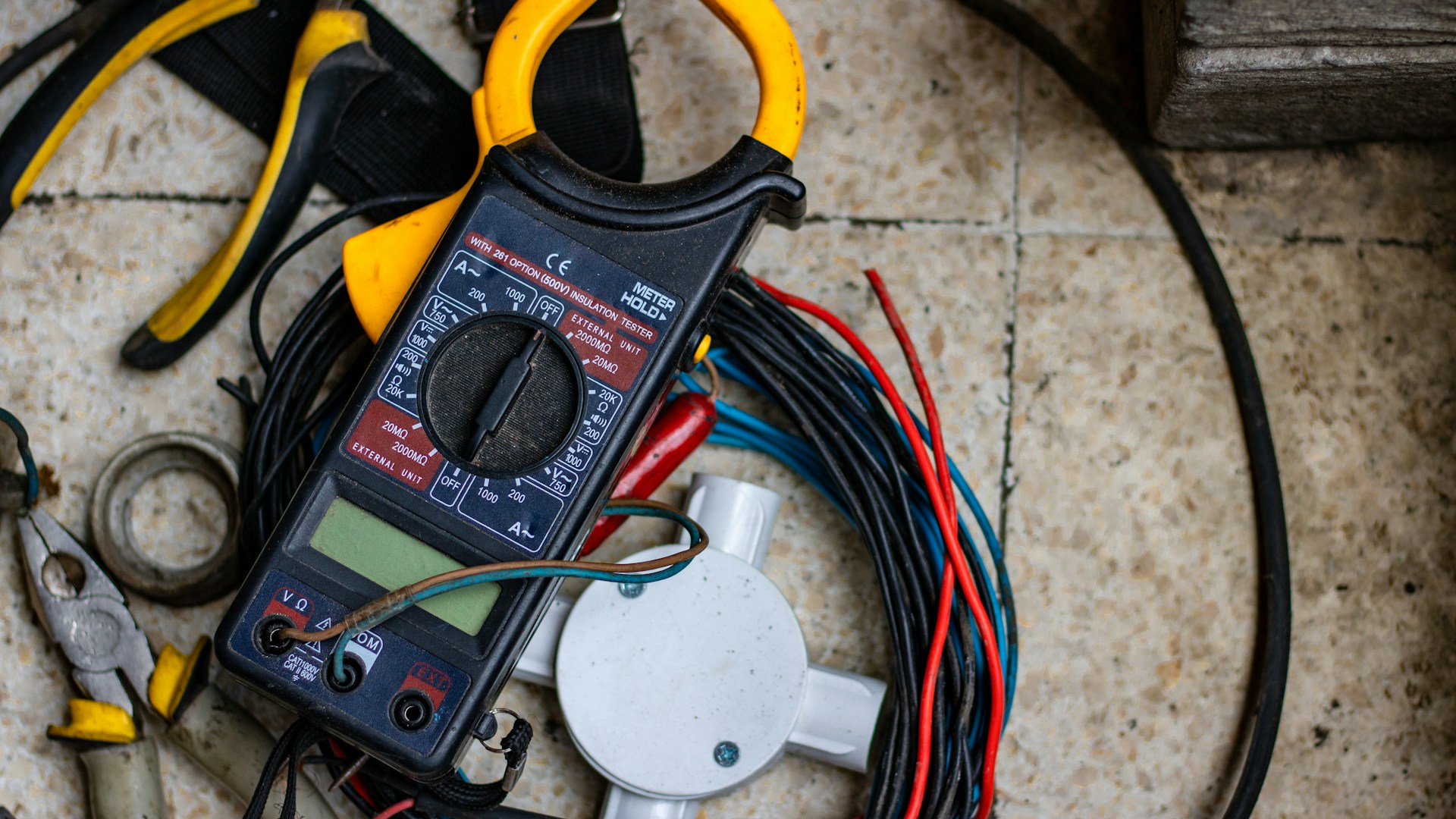 Photo by Hobi industri on Unsplash
14 AWG vs 12 AWG for Home Offices
Both are code-compliant for branch circuits, but they’re not interchangeable.
14 AWG wire:
- Rated for 15-amp circuits
- Less expensive and easier to work with (more flexible)
- Fine for light loads: monitors, laptops, lamps, phone chargers
- Common in older homes wired before the 1990s
12 AWG wire:
- Rated for 20-amp circuits
- Slightly stiffer and more expensive
- Handles heavier loads without complaint
- The smarter pick for a home office running multiple devices
| Feature | 14 AWG / 15 A | 12 AWG / 20 A |
|---|---|---|
| Max continuous load | 1,440 W | 1,920 W |
| Breaker required | 15 A | 20 A |
| Cost per foot (approx.) | Lower | ~10–20% higher |
| Flexibility | More flexible | Stiffer |
| Future-proofing | Limited | Good |
⚠️ Safety rule: Never pair a 12 AWG wire with a 15-amp breaker, and never use 14 AWG wire on a 20-amp circuit. The breaker must match the wire’s ampacity rating — not the other way around.
For a new home office circuit, go with 12 AWG on a 20-amp breaker. The small price difference buys you real headroom.
How Many Outlets Per Circuit?
The NEC doesn’t cap the number of outlets per circuit for general residential branch circuits, but there’s a practical rule: treat each outlet as drawing 1.5 amps, and keep continuous load at or below 80% of the breaker rating.
Here’s what a realistic home office actually pulls:
| Device | Typical Draw |
|---|---|
| Desktop computer (gaming/workstation) | 200–400 W |
| Dual monitors | 60–120 W |
| Laptop charger | 45–90 W |
| USB hub / peripherals | 20–40 W |
| Desk lamp (LED) | 10–20 W |
| Phone chargers (×2) | 20–40 W |
| Total (estimate) | 355–710 W |
A single 20-amp circuit at 120 V handles up to 1,920 watts (1,440 W at the 80% continuous threshold). A well-stocked workstation sits comfortably inside that.
Add a laser printer, space heater, or power-hungry audio gear and the math changes fast. At that point, one circuit probably isn’t enough.
Dedicated Circuits: Do You Need One?
Some devices shouldn’t share a circuit with anything. A dedicated circuit runs straight from the breaker panel to a single outlet or appliance — nothing else tapping in.
Think seriously about a dedicated circuit for:
- Laser printers — they draw 600–1,500 W during fusing, in sudden spikes
- 3D printers — continuous heating elements can draw 200–500 W for hours
- Desktop workstations (high-end GPU builds) — can exceed 600–800 W under load
- Space heaters — almost always need a dedicated 20-amp circuit
- UPS units with high VA ratings
⚠️ A laser printer alone can trip a shared 15-amp circuit. If the lights dim or the breaker trips when the printer warms up, that’s your sign a dedicated circuit is overdue.
Dedicated circuits here almost always use 12 AWG on a 20-amp breaker. For serious gear like professional laser cutters or high-draw 3D printers, check the manufacturer’s specs — you might need 10 AWG on a 30-amp circuit.
Common Mistakes to Avoid
1. Mixing wire gauges on the same circuit Splicing 14 AWG onto a 12 AWG run (or vice versa) creates a bottleneck. The thinner segment limits the whole circuit. Use consistent gauge end to end.
2. Mismatching breaker and wire ratings A 20-amp breaker on 14 AWG wire is a fire hazard. The breaker protects the wire — if you let more current flow than the wire can handle, the wire becomes the fuse. Inside your walls.
3. Overloading a shared circuit Laser printer, space heater, and desktop PC on one 15-amp circuit is asking for nuisance trips and, eventually, degraded connections. Spread heavy loads across circuits or run dedicated lines.
4. Using undersized extension cords Plugging a 14 AWG extension cord into a 20-amp circuit doesn’t upgrade the cord. It’s still rated for less than you think, and most consumer extension cords are way undersized for sustained loads.
5. Ignoring outlet type A 20-amp circuit needs 20-amp rated outlets — the ones with the T-shaped neutral slot. Putting standard 15-amp outlets on a 20-amp circuit is a code violation in most places.
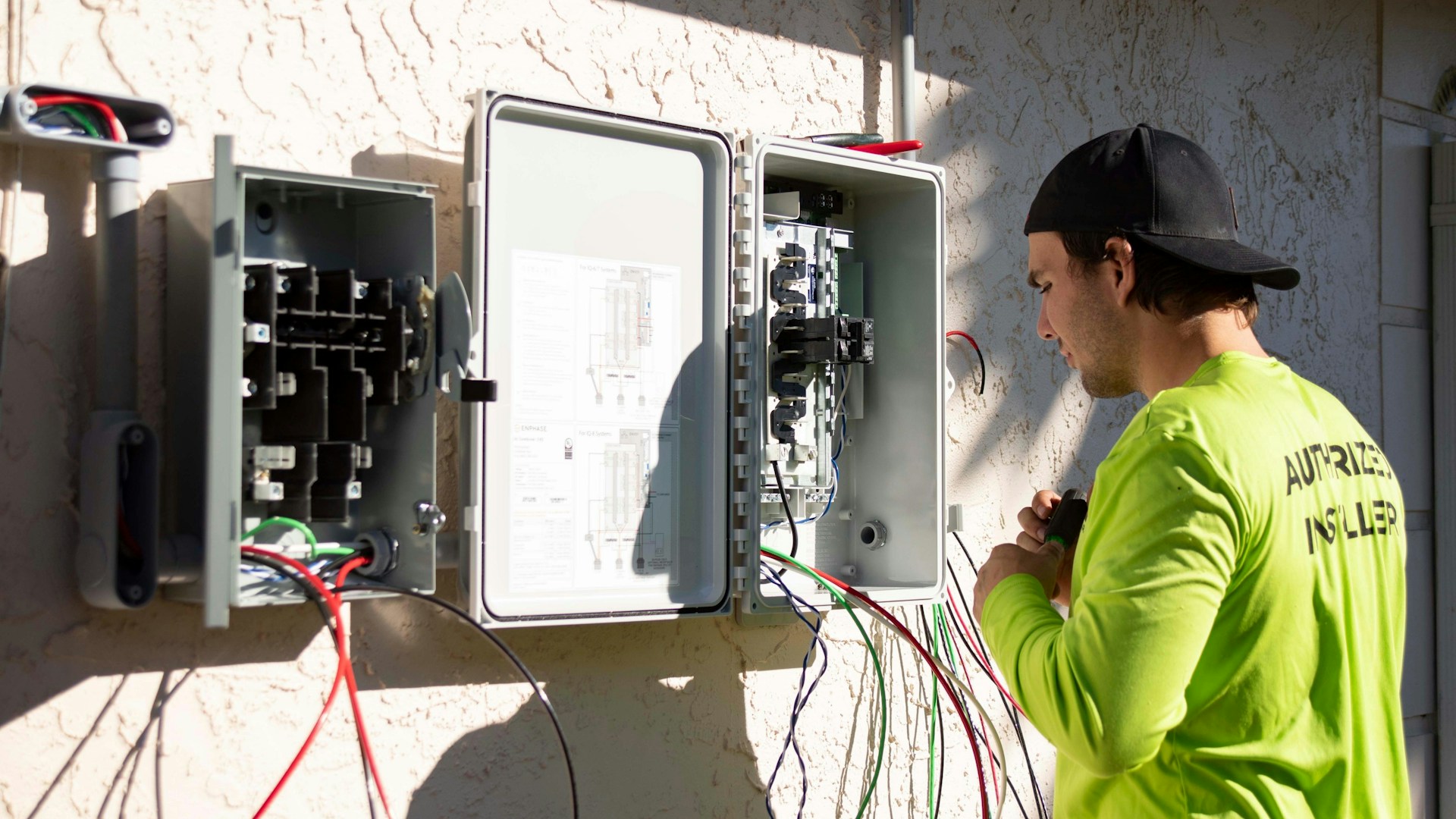 Photo by Raze Solar on Unsplash
When to Call an Electrician
Homeowners can legally do their own wiring in many jurisdictions. That said, some situations call for a licensed pro:
- Adding a circuit from the panel — the bus bars inside are live even with the main breaker off
- Upgrading a full panel — no open slots means panel work, not just circuit work
- Aluminum wiring — older homes with aluminum branch wiring need special connectors; mixing aluminum and copper incorrectly causes dangerous oxidation
- Permits — many municipalities require a permit and inspection for new circuits; electricians handle this routinely
- Unknown existing wiring — if you can’t identify the age, gauge, or condition of what’s in the wall, get it inspected before adding load
⚠️ Code compliance matters: Unpermitted electrical work can affect homeowner’s insurance claims and create liability when selling. Check local requirements before you start.
The Bottom Line
For most home offices, 12 AWG wire on a 20-amp circuit is the right answer. It costs a bit more than 14 AWG, but the headroom and flexibility are worth it.
High-draw devices — laser printers, 3D printers, workstation GPUs — should get their own dedicated circuits rather than competing for capacity with the rest of the office.
When the job touches the breaker panel or there’s any uncertainty about what’s already in the walls, call a licensed electrician. For a clean circuit run from an accessible panel with open slots, a prepared homeowner with a pulled permit can absolutely handle it.
Get the wire gauge right before the walls close up.