Best Filament for Home Decor 3D Prints (PLA vs PETG vs Silk)
Table of Contents
Ask anyone who’s been printing for more than a few months and they’ll tell you the same thing: the printer matters less than what you put in it. I’ve ruined more than a few display pieces by grabbing whatever spool was closest — a beautiful geometric vase printed in the wrong material that warped on the windowsill within a week. Filament choice is where home decor projects actually succeed or fail.
This guide covers the five materials I keep coming back to for interior pieces, along with a settings reference and notes on where to source quality filament without gambling on random Amazon listings.
Quick Comparison Table
| Material | Strength | Visual Appeal | Ease of Printing | Price (per kg) | Best For |
|---|---|---|---|---|---|
| PLA | Medium | Clean matte / gloss | Very easy | $18–$28 | General decor, wall art, planters |
| Silk PLA | Medium | High sheen / metallic | Easy | $22–$35 | Vases, figurines, display pieces |
| PETG | High | Semi-transparent / satin | Moderate | $22–$32 | Functional parts, brackets, clips |
| Wood PLA | Low–Medium | Natural wood texture | Easy–Moderate | $25–$40 | Frames, trays, rustic accents |
| Metal-fill PLA | Medium | Brushed metal look | Moderate | $35–$60 | Premium display items, bookends |
Prices reflect approximate retail cost as of mid-2026 and vary by brand and region.
PLA: The Everyday Choice
PLA is where most people start, and for home decor it’s also where many people stay — for good reason. It prints at 200–220°C with no enclosure needed, smells like nothing, and handles complexity well. Geometric wall art, cable organizers, decorative trays, lightweight shelf pieces: all of this works in standard PLA without any drama.
The finishing story is good too. Layer lines sand down fairly easily, primer sticks well, and spray paint bonds cleanly to the surface. That matters if you want a color that no filament brand offers.
Where PLA fails is heat. It softens around 55–60°C, which sounds like plenty until you realize that a windowsill in July, a car dashboard, or a spot too close to a radiator can permanently deform a print. For indoor display pieces that live away from heat sources, though, PLA is hard to argue with on price alone.
Silk PLA: Best Visual Results
Silk PLA is the only choice if you want anything on a shelf that doesn’t look like a printed object. The additive in the filament produces a high-sheen, near-metallic surface finish that comes straight off the bed — no post-processing, no spraying, no wet-sanding. Just peel the print and put it on display.
Vases, geometric sculptures, candle holders — anything where someone might pick it up and wonder whether it was cast rather than printed. Silk Gold and Silk Copper in particular can genuinely read as metalwork at a casual glance. The material also tends to flow more consistently than matte PLA, which means fewer surface blemishes on curved geometry.
The trade-off: Silk PLA is more brittle than regular PLA. Drop it on tile and you might get a crack. It also shares PLA’s heat limitation, so it’s purely a display material. For anything that needs to hold weight or handle stress, look at PETG.
One thing that’s expanded recently: dual-color silk filaments that blend two hues in a single strand produce iridescent gradients when printed tall. A vase or spiral lamp shade in dual-silk is genuinely difficult to explain to someone who hasn’t seen it before.
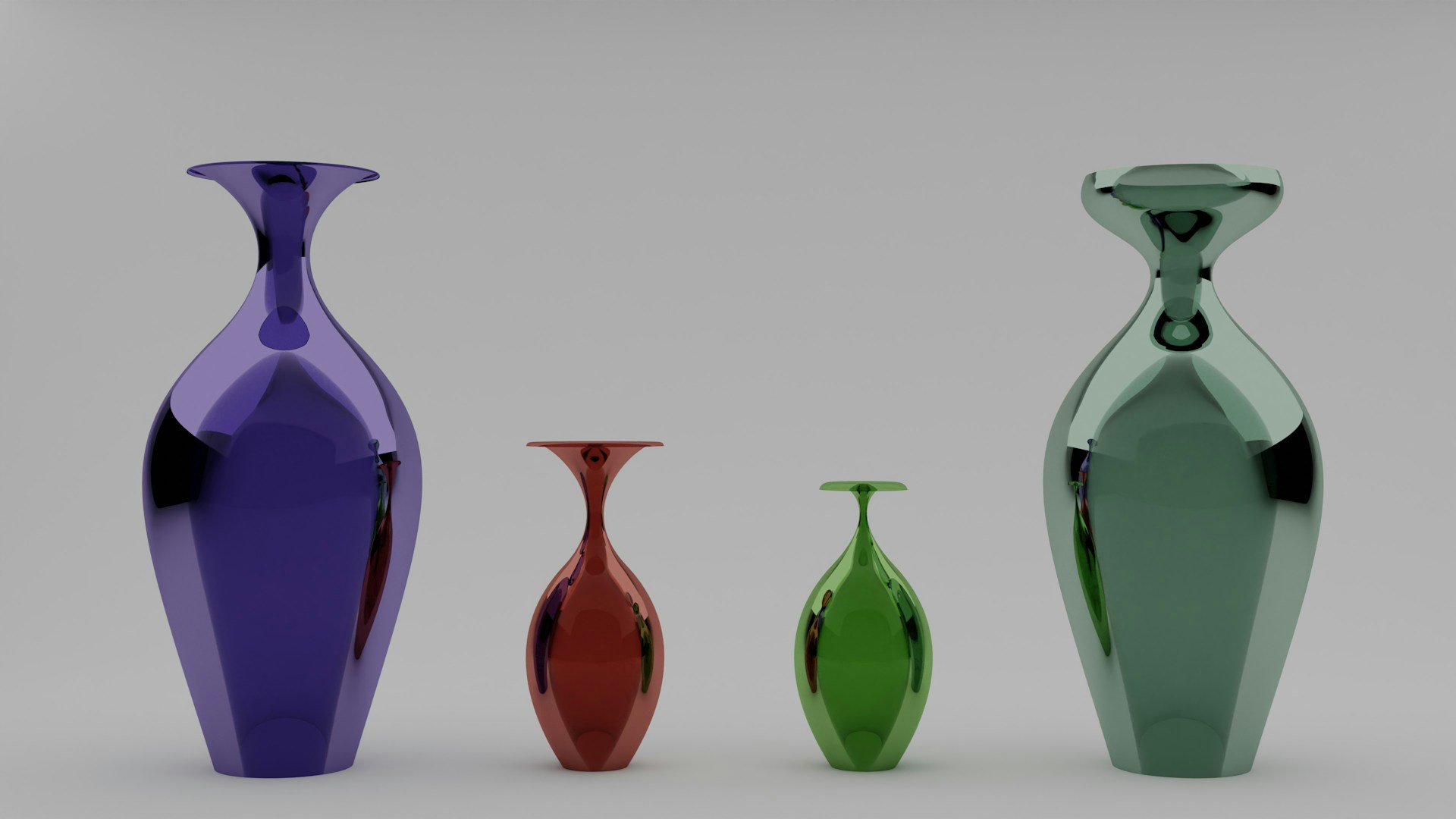 Photo by Shubham Dhage on Unsplash
PETG: For Functional Parts
PETG doesn’t win any beauty contests, but it’s the material I reach for every time a piece needs to actually do something. Brackets that bear weight, furniture replacement clips, hooks that hold things on walls — PLA would eventually fail under those conditions; PETG won’t.
The numbers: it prints at 230–250°C, tolerates heat up to around 80°C, and has significantly better layer adhesion and impact resistance than PLA. It’s also resistant to most household cleaners, which makes it practical for bathroom accessories or kitchen organizers that get wiped down regularly.
Visually, PETG has a semi-transparent satin quality that reads as clean and modern. Clear and translucent variants can do interesting things with LED light diffusers. The opaque color range is narrower than PLA, but the finish is distinctive enough that it often looks intentional.
The printing experience takes adjustment. PETG strings aggressively if retraction isn’t tuned, and bed adhesion requires more attention than PLA. Anyone who’s already comfortable with PLA will figure it out within a spool, but this is not a first-material recommendation.
Wood PLA: Unique Aesthetic
Wood PLA is a composite — PLA mixed with fine wood particles at roughly 15–30% by weight — and the result behaves surprisingly like actual wood in post-processing. You can sand it, stain it, and wax it. At a distance, a well-finished wood PLA piece can genuinely fool the eye.
Picture frames, decorative trays, candle bases, small shelving brackets with a rustic feel: these all benefit from this material in a way that no paint job on standard PLA can replicate. The surface has real texture and a faint organic scent during printing that signals something different is happening.
Print temperature is the interesting lever. Lower temps (190–200°C) produce a lighter color and finer texture. Push it above 210°C and the wood particles start to char slightly, creating a darker tone with more pronounced grain — which some makers use intentionally for a driftwood or burned-wood effect. It’s one of the few materials where deliberately running hotter gives you a genuinely useful aesthetic result.
The downside: wood-filled composites are brittle and not load-bearing. They also wear brass nozzles noticeably faster than pure PLA. A 0.4mm hardened steel nozzle is worth the investment before running more than a few spools.
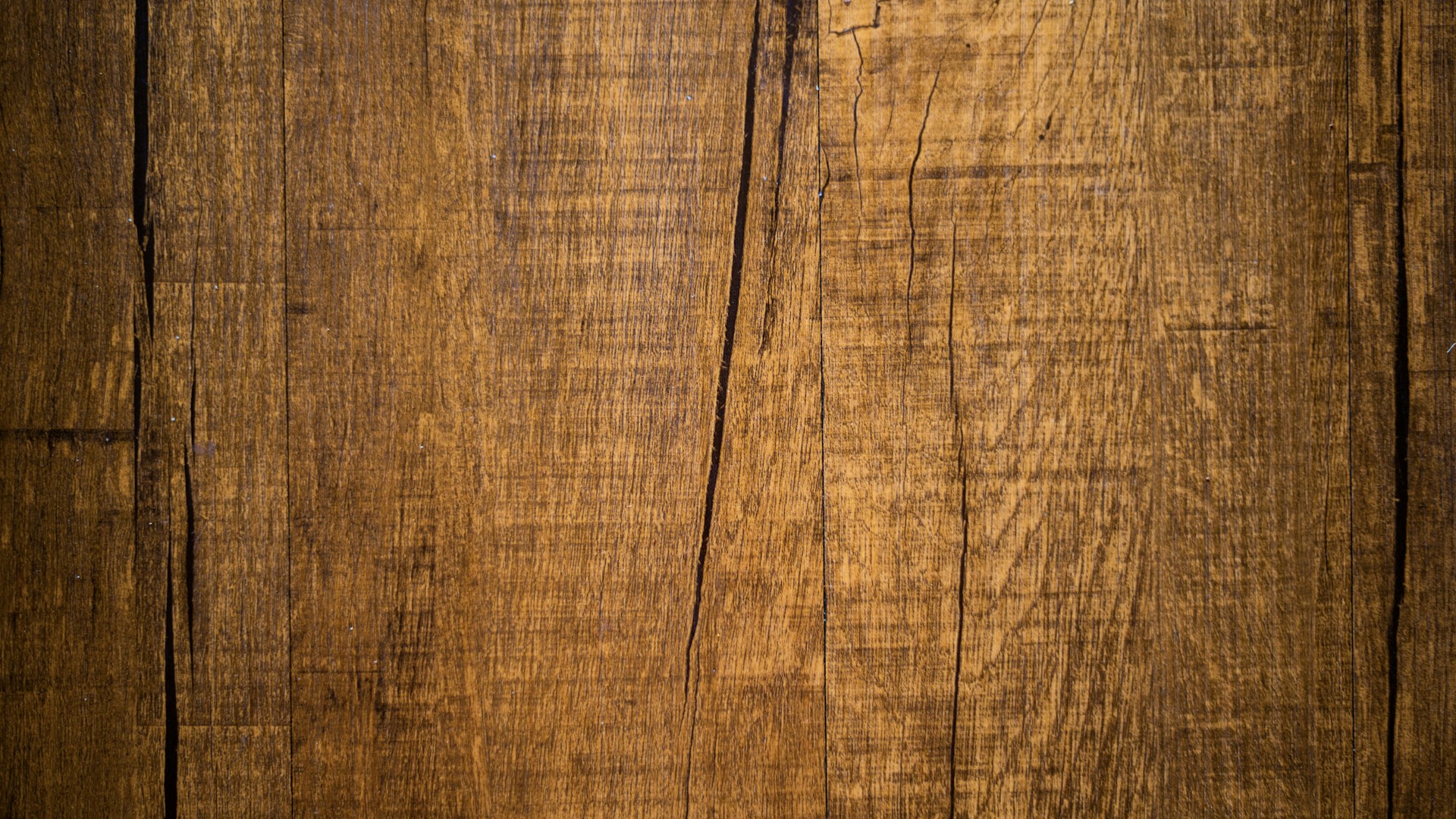 Photo by Christopher Stark on Unsplash
Metal-fill PLA: Premium Look
Metal-fill filaments — PLA blended with fine copper, iron, bronze, or aluminum powder — occupy a different category from the rest. The density of the filler gives finished pieces actual weight. Pick up a bookend printed in copper-fill and it doesn’t feel like plastic. That heft alone changes how the object reads in a room.
Bookends, decorative spheres, abstract sculptures, architectural models: anything where the physical presence of the object matters. The finish can be taken further than any other filament type: polish through progressively finer sandpaper up to 2000-grit wet-dry, follow with a metal polishing compound, and copper-fill or bronze-fill pieces come up near-mirror. Iron-fill can be chemically patinated to develop realistic rust or verdigris — useful if you’re going for an aged industrial look.
The same nozzle warning applies as with wood PLA, but more aggressively. A hardened steel or ruby-tipped nozzle isn’t optional here. Print speeds and temperatures also need to be dialed back relative to standard PLA to avoid clogs from the dense filler.
What to Avoid for Home Decor
ABS gets brought up regularly, usually by people who’ve been printing since before PLA became dominant. In an industrial workshop with proper ventilation, ABS has legitimate uses. In a living room, bedroom, or kitchen, it’s a bad idea.
ABS releases styrene vapors during printing — a compound classified as a possible human carcinogen. An enclosed printer with active carbon filtration can manage this, but an open printer in a living space creates real air quality concerns. On top of that, ABS warps aggressively without a heated enclosure and requires acetone for serious post-processing.
For anyone who needs the heat resistance that ABS offers, ASA is a better answer. It’s UV-stable, has lower emissions, and handles outdoor or high-temperature applications without the enclosure dependency. High-temperature PETG variants are another option for indoor functional parts.
Print Settings by Material
| Material | Nozzle Temp | Bed Temp | Print Speed | Cooling Fan | Notes |
|---|---|---|---|---|---|
| PLA | 200–220°C | 50–60°C | 50–80 mm/s | 100% | Works on glass or PEI bed |
| Silk PLA | 215–230°C | 50–65°C | 40–60 mm/s | 80–100% | Slower speeds improve sheen |
| PETG | 230–250°C | 70–85°C | 40–60 mm/s | 30–50% | Too much cooling causes delamination |
| Wood PLA | 190–215°C | 50–60°C | 30–50 mm/s | 80–100% | Use hardened nozzle |
| Metal-fill PLA | 195–215°C | 50–60°C | 25–40 mm/s | 80–100% | Use hardened nozzle; reduce retraction |
These are starting points. Every printer and spool is different — run a temperature tower and a retraction test before committing to a multi-hour print.
Where to Buy Quality Filament
Brand consistency matters more than most people realize. Diameter tolerance, moisture control, and batch-to-batch color accuracy all affect print quality in ways that are hard to diagnose without knowing what the filament itself is doing.
Bambu Lab produces house-brand PLA and PETG optimized for their own machines, though it runs well on other printers. Their Silk PLA range gets consistently strong feedback for sheen quality and print reliability.
Prusament — made by Prusa Research — holds some of the tightest diameter tolerances in the consumer market (+/- 0.02mm). Their PETG and PLA Galaxy series are popular specifically because they behave predictably and have well-documented profiles.
Hatchbox is the accessible entry point for North American buyers, particularly for PLA and wood-fill composites. Strong value-to-quality ratio, widely available, and consistent batch quality across restocks.
eSUN covers the specialty end at mid-range pricing: eSilk, ePLA-Wood, ePLA-Metal. Not premium brand quality but genuinely good enough for display-grade home decor at lower cost.
One note on storage: however good the filament is, leaving it out in humid air will degrade it. Sealed container with silica gel desiccant, especially for PETG and any composite. Moisture causes popping, stringing, and weak layer adhesion — problems that get blamed on the printer but often trace back to the spool.
Conclusion
Standard PLA covers the broadest range of everyday decorative work at the lowest cost — it’s the default for good reason. Silk PLA is the right call whenever visual impact on a shelf or display surface matters more than structural performance. PETG handles anything that needs to actually hold, bear weight, or survive moisture. Wood PLA and metal-fill composites produce results that look genuinely different from plastic, which matters when a piece needs to blend into a room rather than announce itself as a print.
Skip ABS in home environments. The alternatives are better across the board.
Whatever material you’re working with, a hardened nozzle before any composite and desiccant storage after every session will protect both the hardware and the filament quality. Small habits, consistently applied, are what separate prints that look like they belong in a room from prints that look like prints.